Quick answer
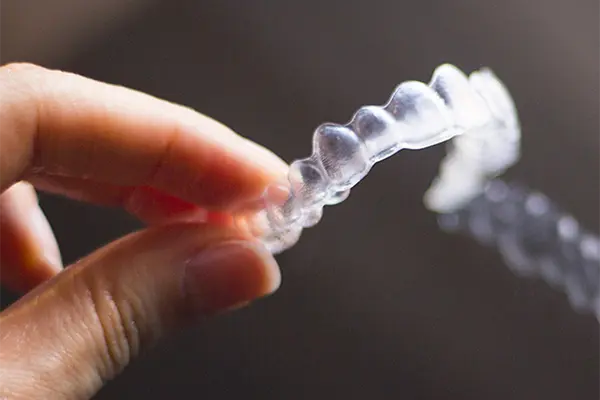
Your friend may have finished Invisalign faster because treatment timelines
depend on several factors, including case complexity, individual biology, patient compliance, and
the expertise and protocols used in treatment planning.
At Artisan Dental Bellevue, Dr. Syeda Bakhtawar uses advanced Invisalign protocols, precise treatment
planning, and carefully sequenced tooth movements to help many patients complete treatment
efficiently, often within 6 to 9 months.
A shorter treatment timeline does not mean the treatment is less thorough or the results are
less stable.
6-9 months
Typical treatment
completion for many
patients
4-5 visits
Average appointments
during treatment
Every 4 days
Aligner changes under our
protocol for appropriately
selected
patients
Top 1%
Dr. Syeda’s Invisalign
Diamond Provider
recognition
Key takeaways
- Invisalign timelines vary based on case complexity, root anatomy, age, bone biology, and individual
response to orthodontic forces.
- Advanced treatment planning can improve efficiency by eliminating unnecessary movements and
strategically sequencing tooth movements.
- Patient compliance, including consistent aligner wear and following prescribed instructions, plays a
significant role in treatment progress.
- At Artisan Dental Bellevue, many patients complete Invisalign treatment in approximately 6 to 9 months.
- A longer treatment timeline does not necessarily indicate better precision, quality, or stability.
- Long-term stability depends on appropriate retention and individual biological factors, not
simply how many months treatment took.
The Short Answer: Everyone’s Invisalign Timeline Is Different
Your friend may have finished Invisalign faster because their
treatment needs were different, their teeth responded more predictably, or their treatment was planned using a
more efficient approach.
Invisalign is not a one-size-fits-all treatment. Two patients with similar-looking smiles may require different
movements, different numbers of aligners, and different treatment timelines.
An important factor that patients may not realize is that the expertise of the Invisalign provider and the
precision of treatment planning can significantly influence treatment efficiency.
Why comparing your treatment to a friend’s is not apples-to-apples
Every smile begins from a different starting point.
Some patients require correction of mild crowding, while others need more complex movements involving rotations,
root positioning, bite correction, or significant spacing.
Factors such as root length and morphology, periodontal support, age, bone density, and individual bone
remodeling can influence how predictably teeth respond.
Additionally, the way tooth movements are designed, sequenced, and coordinated can influence how efficiently
treatment progresses.
What a normal Invisalign timeline actually looks like
Invisalign treatment can range from several months to well over a year, depending on individual needs.
At Artisan Dental Bellevue, many patients complete
treatment within approximately 6 to 9 months through advanced treatment planning and carefully developed
clinical protocols.
Dr. Syeda emphasizes precise movement design, eliminating unnecessary or inefficient movements, and optimizing
aligner sequencing to achieve predictable results.
More complex cases or patients with slower biological responses may require additional time.
Treatment efficiency is a reflection of thoughtful planning, not a compromise in quality.
What Determines How Long Invisalign Takes
Several important factors influence treatment duration.
The complexity of your case
Crowding, spacing, rotations, bite discrepancies, and the type of tooth movements required all influence
treatment planning.
Certain movements, particularly those involving significant root movement or difficult rotations, may require
additional aligners or refinements.
How your teeth and bone respond to aligner forces
Orthodontic tooth movement depends on biological remodeling of the surrounding bone.
This process varies between individuals and may be influenced by age, bone density, periodontal condition, root
anatomy, and individual biological response.
Some patients respond predictably to planned movements, while others may require more time or modifications to
their treatment.
The precision of your treatment plan
Treatment planning is one of the most important aspects of efficient Invisalign treatment.
Not all aligner treatment plans are designed the same way.
Advanced planning may involve:
- Eliminating unnecessary or inefficient tooth movements
- Sequencing movements strategically
- Optimizing attachments and biomechanics
- Planning predictable movements within appropriate biological limits
- Minimizing avoidable refinements
- Using carefully monitored aligner-change protocols
At Artisan Dental Bellevue, these principles are central to Dr. Syeda's approach.
Patient compliance
Consistent aligner wear is essential for predictable tooth movement.
When aligners are not worn as prescribed, teeth may fail to track according to the planned movements, resulting
in additional aligners, refinements, or extended treatment.
Following the prescribed wear schedule is one of the most important ways patients can contribute to an efficient
treatment experience.
Biology Is Not a Race: How Teeth Move Differently for Each Person
Orthodontic tooth movement is a biological process, and every patient responds differently.
Tooth movement predictability varies by movement type
Some tooth movements are more predictable than others.
Simple tipping movements may be easier to achieve, while significant rotations, extrusion, or complex root
movements may require additional planning and monitoring.
An experienced Invisalign provider can anticipate these challenges and design movements strategically to improve
predictability.
Age, bone biology, root anatomy, and individual response
Age, bone remodeling activity, root length, root morphology, and surrounding periodontal structures can all
influence orthodontic tooth movement.
These factors may affect the number of aligners required, the predictability of movement, and overall treatment
duration.
A longer treatment timeline may reflect these individual biological considerations rather than the quality of
treatment planning.
Why some movements need refinements
Refinements are sometimes necessary when certain movements do not track precisely as planned or when additional
adjustments are clinically indicated.
They are a normal part of orthodontic treatment.
Through advanced planning and careful movement sequencing, Dr. Syeda aims to minimize unnecessary refinements
while maintaining the desired clinical outcome.
A note from Dr. Syeda
"My goal is to deliver beautiful, healthy smiles through precise, efficient, and
individualized Invisalign treatment. Advanced treatment planning allows us to eliminate unnecessary
movements, streamline treatment, and achieve predictable results. Efficiency and excellence can absolutely
go hand in hand."
The Habits That Genuinely Affect Your Treatment Timeline
Patient compliance is an essential part of successful Invisalign treatment.
Even the most carefully designed treatment plan depends on consistent aligner wear and following the prescribed
instructions.
Consistent daily aligner wear
Aligners must be worn for the recommended number of hours each day.
Frequent or prolonged removal can interfere with planned tooth movements and lead to tracking problems or delays.
Attending scheduled check-ins and following instructions
At Artisan Dental Bellevue, many patients require only 4 to 5 appointments during treatment.
These appointments allow Dr. Syeda to evaluate progress, confirm aligner tracking, and make adjustments when
clinically necessary.
Why skipping steps can delay treatment
Skipping aligners, wearing them inconsistently, or changing trays outside the prescribed schedule can interfere
with planned tooth movements.
Patients should follow their individualized instructions rather than modifying their schedule independently.
How Advanced Invisalign Planning Can Help Patients Finish Sooner
Efficient Invisalign treatment begins with precision, not shortcuts.
At Artisan Dental Bellevue, Dr. Syeda uses advanced clinical protocols and
extensive Invisalign training to develop streamlined, individualized treatment plans.
Eliminating unnecessary tooth movements
Not every movement generated during digital treatment planning is necessarily essential to achieving the desired
clinical outcome.
Careful evaluation and refinement of the treatment plan can help eliminate unnecessary or inefficient movements,
reducing avoidable complexity.
Strategic sequencing of tooth movements
The order and coordination of tooth movements can influence treatment efficiency.
Thoughtful sequencing allows movements to be organized in a way that improves predictability and reduces
unnecessary steps.
Advanced aligner protocols
At Artisan Dental Bellevue, suitable patients may follow a carefully planned four-day aligner-change protocol.
This schedule is selected based on the patient's clinical needs, planned movement increments, and ongoing
assessment of tooth tracking.
It is not appropriate for every patient or every type of movement, and adjustments are made when indicated.
Expertise and continuing education
Dr. Syeda is an Invisalign Diamond
Provider, placing her among the top 1% of providers nationwide by Invisalign case volume.
She has also received Done-In-One recognition from the American Academy of Clear Aligners, reflecting her
emphasis on efficient treatment planning and minimizing unnecessary refinements.
Her advanced training and clinical experience help her develop individualized plans designed to achieve
predictable outcomes efficiently.
Why Longer Invisalign Treatment Is Not Necessarily Better
A longer treatment timeline does not automatically translate into greater precision, better results, or improved
long-term stability.
Treatment duration should reflect the patient's clinical needs and biological response.
Some patients require additional time because of complex tooth movements, root anatomy, individual bone
remodeling, periodontal considerations, or inconsistent aligner wear.
Others may complete treatment efficiently because their movements have been carefully planned and sequenced.
The goal is not to make treatment unnecessarily longer or shorter. The goal is to achieve the intended
clinical outcome as efficiently and predictably as possible.
Precision and efficiency can go together
Advanced treatment planning can help achieve precise results while reducing unnecessary movements and avoidable
treatment time.
Efficiency does not mean sacrificing attention to detail. It means using clinical expertise and thoughtful
planning to make each stage of treatment purposeful.
The role of thoughtful planning
At Artisan Dental Bellevue, Dr. Syeda combines advanced Invisalign protocols, individualized biomechanics, and
ongoing clinical monitoring to help patients achieve their desired results.
This approach allows many patients to complete treatment in approximately 6 to 9 months while maintaining careful
attention to clinical quality.
What Keeps Your Invisalign Results Stable After Treatment?
One of the most important things patients should understand is that teeth can naturally shift after
orthodontic treatment, regardless of how long the original treatment took.
This tendency is not unique to Invisalign and does not automatically indicate that treatment was completed too
quickly.
Why teeth may shift after treatment
Post-treatment tooth movement may be influenced by several factors, including:
- Inconsistent or inadequate retainer wear
- Natural aging and lifelong dental changes
- Individual periodontal and bone biology
- Changes in tooth position, occlusion, or supporting structures
- Individual susceptibility to orthodontic relapse
Retainer compliance is essential
Retainers help maintain teeth in their corrected positions after active orthodontic treatment.
Consistent retainer wear according to the dentist's instructions is one of the most important factors patients
can control to preserve their results.
Whether Invisalign treatment takes 6 months or 18 months, following the prescribed retention protocol remains
essential.
Does faster Invisalign treatment cause relapse?
A shorter treatment duration, by itself, does not establish an increased risk of relapse.
Long-term stability depends on multiple factors, including the final tooth positions, periodontal and occlusal
considerations, individual biology, and appropriate retention.
At Artisan Dental Bellevue, treatment efficiency is achieved through carefully planned and clinically monitored
movements rather than patients independently accelerating their aligner schedule.
For directions, use this helpful Google Map or get step-by-step navigation through
Get Directions.
Meet Dr. Syeda Bakhtawar
Dr. Syeda is a compassionate and
highly experienced dentist at Artisan Dental Bellevue, known for delivering personalized dental care with a
gentle approach. With more than two decades of clinical experience, she combines advanced dental technology,
precision techniques, and patient-focused treatment planning to help individuals achieve healthy, confident
smiles. She has also been recognized as a Seattle Met Top Dentist Recognition for five consecutive years
(2022–2026) and is a Diamond Invisalign Provider ranked among the Top 1%
Nationwide, reflecting her exceptional expertise in clear aligner treatment and modern smile
transformation.
For Dr. Syeda, dentistry is more than a profession; it is a passion driven by care, trust, and lasting patient
relationships. She focuses on comfort, clear communication, and customized treatment so every patient feels
confident and supported throughout their dental journey. Her dedication to excellence, compassion, and
continuous learning allows her to deliver high-quality care while creating a welcoming, stress-free dental
experience.
Frequently asked questions
- Q: Can you finish Invisalign faster?
Yes. Efficient Invisalign treatment is possible through precise treatment planning, strategic movement
sequencing, advanced protocols, and consistent patient compliance. At Artisan Dental Bellevue, many patients
complete treatment within 6 to 9 months, with suitable patients following a prescribed four-day
aligner-change protocol.
- Q: Why is my Invisalign treatment taking longer than my friend’s?
Treatment duration varies based on the complexity of required movements, age, root anatomy, bone
remodeling response, individual biology, patient compliance, and treatment planning. A longer timeline does
not necessarily mean your treatment is better or worse.
- Q: Does faster Invisalign treatment mean the results will not last?
No. A shorter treatment timeline does not, by itself, mean that the results will be less stable.
Long-term stability depends on multiple factors, particularly appropriate retainer use and individual
biological considerations. All orthodontic patients need a retention plan, regardless of treatment duration.
- Q: What is the biggest complaint with Invisalign?
Some patients experience temporary tightness, mild discomfort, or speech changes when beginning
Invisalign or switching aligners. These symptoms are generally temporary, although experiences vary between
patients.
- Q: What is the failure rate of Invisalign?
There is no single failure rate that applies to every Invisalign case. Treatment predictability
depends on case complexity, the types of tooth movements required, biological response, treatment planning,
and patient compliance. Careful planning and ongoing clinical monitoring help identify tracking concerns and
determine when adjustments are necessary.
- Q: Does wearing aligners longer each day speed up treatment?
Consistent wear for the prescribed daily duration supports predictable tooth movement and helps
prevent avoidable delays. However, wearing aligners beyond the recommended daily duration or changing trays
independently does not necessarily accelerate treatment. The most effective approach is to follow the
individualized treatment plan.
Remember
Your Invisalign timeline is unique to you.
At Artisan Dental Bellevue, our philosophy is centered on precision, efficiency, advanced treatment
planning, and individualized care.
A shorter treatment timeline can reflect a carefully streamlined treatment plan, not a compromise in
quality.
Regardless of treatment duration, consistent retainer wear and ongoing dental care are essential to
maintaining your beautiful smile.
To schedule an Invisalign consultation with Dr. Syeda Bakhtawar, call Artisan Dental Bellevue at 425-454-2005.
Disclaimer
This article provides general educational information and does not replace individualized clinical
advice. Invisalign treatment timelines, aligner-change intervals, outcomes, and retention needs vary by
patient.
Related Posts
Meet Dr. Syeda Bakhtawar Dr. Syeda is a compassionate and highly experienced dentist at Artisan Dental Bellevue, known for delivering personalized dental care with a gentle approach. With more than two decades of clinical experience, she combines advanced dental technology, precision techniques, and patient-focused treatment planning to help individuals achieve healthy, confident smiles. She is…
Meet Dr. Syeda Bakhtawar Dr. Syeda is a compassionate and highly experienced dentist at Artisan Dental Bellevue, known for delivering personalized dental care with a gentle approach. With more than two decades of clinical experience, she combines advanced dental technology, precision techniques, and patient-focused treatment planning to help individuals achieve healthy, confident smiles. She is…
A confident smile begins with healthy teeth and gums. However, for many individuals, the aesthetic aspect of their smile matters just as much. Fortunately, cosmetic dental services offer a wide range of procedures designed to enhance the appearance of teeth, gums, and overall smile. A smile makeover through cosmetic dental services can transform the appearance…